(+98) 3153540424
 info@atrinfood.com

Health Benefits of Grape Syrup
It's a fact that grape syrup is delicious, just like in its natural form, grapes contain a lot of antioxidants and beneficial compounds that make it a great early pure fruit.
1. Natural Energy Booster
Grape syrup is a concentrated source of natural glucose and fructose, providing quick, easily digestible energy. Traditionally, it has been used to support physical strength and stamina, especially in colder seasons.
2. Rich in Minerals
It retains essential minerals such as iron, potassium, and calcium, supporting bone health, circulation, and overall vitality. Its high iron content makes it particularly beneficial for individuals with iron deficiency or anemia concerns.
3. Antioxidant Properties
Like fresh grapes, grape syrup contains polyphenols and flavonoids, powerful antioxidants that help reduce oxidative stress, protect cells from damage, and promote healthy aging.
4. Digestive Benefits
In traditional Persian medicine, grape syrup is considered beneficial for improving digestion and supporting gut health. Its natural sweetness is gentle on the stomach and can soothe digestive discomfort when consumed moderately.
5. Supports Immune Function
The concentration of vitamins and minerals in grape syrup contributes to overall immune resilience, making it a favored winter pantry staple.
Nutritional Value of Grape Syrup
Here is the nutritional value of grape syrup per 100g (approximate values):
It contains the following:
Nutrient Value
Energy 319 kcal
Carbohydrates 81 g
Sugar 79 g
Fiber 0.5 g
Fat 0.1 g
Protein 0.3 g
Vitamin C 2 mg
Potassium 190 mg
Iron 0.4 mg
Calcium 10 mg
Magnesium 12 mg
Technical Guide: Optimizing Food Formulations with Grape Syrup
The global food industry is undergoing a significant paradigm shift as consumer demand pivots toward clean-label alternatives to refined sugars. Food scientists, product developers, and health-conscious buyers are increasingly seeking liquid sweetening agents that deliver clean sensory profiles alongside functional, health-supportive biochemistry.
Nutritional Architecture of Grape Syrup
The distinct biochemical composition of grape syrup makes it highly effective in commercial food systems. Unlike refined sucrose, which undergoes chemical purification, pure unrefined grape concentrates retain a dense matrix of micronutrients and plant compounds during thermal evaporation.
Macronutrient Profiles and Caloric Density
From a purely structural perspective, grape concentrates consist primarily of monosaccharides dissolved in localized moisture. The lack of complex starches ensures a smooth texture and immediate solubility across varying thermal processing limits. The average energetic yield matches standard industrial liquid sweeteners closely, delivering approximately 280 to 300 kilocalories per 100 grams.
Vitamin and Mineral Content
The raw nutritional value of concentrated grape juices includes critical trace minerals that are fully stripped during standard sugar refining. The thermal concentration process traps high levels of elemental potassium, calcium, magnesium, and bioavailable iron.
- Potassium: Vital for osmotic pressure regulation in human cellular matrices, with averages reaching up to 240 milligrams per 100 grams.
- Iron: Supports hemoglobin synthesis, making unrefined dark fruit concentrates a historical therapeutic recommendation for trace mineral deficiencies.
- Calcium and Magnesium: Retained in stable ionic forms, ensuring these structural minerals remain active despite pasteurization temperatures.
Bioactive Compounds and Antioxidants
Beyond basic caloric metrics, the primary value of grape concentrates lies in their polyphenol concentrations. These syrups are dense with active secondary metabolites, including:
- Resveratrol: A powerful stilbenoid extensively researched for its role in cardiovascular protection and reducing systemic oxidative stress.
- Anthocyanins: The pigment compounds responsible for the deep amber and purple hues of dark grape concentrates, which act as highly effective free-radical scavengers.
- Flavonoids: Plant pigments that stabilize organic food products by inhibiting the oxidative degradation of vulnerable lipid structures.
Functional Applications of Grape Molasses in Food Systems
Known historically across Mediterranean and Middle Eastern logistics chains as Grape molasses (or pekmez), this thick fruit reduction serves as both a functional texturizer and a biological preservation aid. Industrial product developers leverage its high osmotic pressure to naturally extend commercial product shelf lives.
Moisture Retention and Humectant Capabilities
The high concentration of fructose and glucose molecules within Grape molasses yields excellent hygroscopic behavior—meaning it actively binds with water. When integrated into baked goods or grain bars, it reduces water activity levels ($a_w$).
This binding mechanism locks in moisture, effectively preventing starch retrogradation (staling) and keeping bakery crumb structures soft over long retail distribution cycles without requiring synthetic humectants.
Non-Enzymatic Browning and Color Development
During baking and thermal extrusion, the simple reducing sugars in the syrup participate readily in the Maillard reaction. This reaction fuses amino acids and reducing sugars under heat to create a deep golden-brown crust and a complex, caramel-like aromatic profile.
[Reducing Sugars in Grape Molasses] + [Amino Acids / Proteins]
↓ (Thermal Processing)
[Advanced Maillard Browning + Complex Caramelization]
Using this natural process allows food clean-label brands to achieve rich visual coloring in cookies, crackers, and breakfast cereals without relying on artificial dyes or chemically altered caramel colorants.
Metabolic Impact and Glycemic Response
The metabolic profile of fruit concentrates is an essential factor for food scientists formulating health-focused products. Incorporating an organic Grape syrup base alters how the human digestive tract absorbs carbohydrates compared to standard corn sweeteners or refined beet sugars.
Understanding Carbohydrate Absorption
Refined table sugar consists of sucrose, a disaccharide that requires immediate enzymatic cleavage by sucrase in the small intestine. In contrast, organic Grape syrup provides glucose and fructose in their pre-hydrolyzed, free monosaccharide states.
Because these two simple sugars utilize distinct transport mechanisms in the gut—SGLT1 for glucose and GLUT5 for fructose—their absorption tracks follow separate, highly efficient pathways.
┌─► Glucose ──► SGLT1 Transporter ──► Direct Energy / Glycogen
│
Organic Grape Syrup
│
└─► Fructose ─► GLUT5 Transporter ──► Hepatic Processing
Glycemic Index Variations
While all concentrated sugar sources impact blood glucose levels, the specific fructose-to-glucose ratio in grape matrices yields a more moderate low glycemic index response than pure glucose or high-fructose corn syrup ($HFCS$).
- Fructose Hepatic Processing: Fructose bypasses early insulin-dependent regulatory steps by routing directly through the liver, resulting in a minimal immediate surge in blood glucose.
- Extended Energy Delivery: The combination of a lower glycemic index and natural organic acids ensures a more sustained release of energy, avoiding the sharp insulin spikes and subsequent crashes linked to highly processed, refined sugars.
Comparing Commercial Liquid Sweeteners
To help formulation engineers evaluate sugar replacement options, the table below contrasts the chemical and physical characteristics of grape concentrate against other standard industrial liquid sweeteners.
Sweetener Type | Primary Sugar Composition | Glycemic Index (Approx.) | Key Micronutrients / Bioactive Compounds |
Grape Syrup / Molasses | Fructose, Glucose (Monosaccharides) | 50 – 54 | Potassium, Iron, Resveratrol, Anthocyanins |
Raw Honey | Fructose, Glucose Blend | 58 – 62 | Organic Acids, Enzymes, Trace Vitamin C |
Pure Maple Syrup | Sucrose (Disaccharide) | 54 | Manganese, Zinc, Calcium |
High-Fructose Corn Syrup ($HFCS-55$) | Free Fructose ($55\%$), Free Glucose ($45\%$) | 65 – 68 | None (Stripped during chemical refinement) |
Technical Sourcing and Quality Assurance Standard Operating Procedures
Maintaining final product consistency requires a strict quality assurance protocol when sourcing bulk liquid fruit concentrates. Processing facilities must implement standard operating procedures ($SOPs$) to manage the natural variability of agricultural inputs.
Key Quality Metrics
- Solids Content (°Brix): Bulk ingredients must be measured using a digital refractometer to confirm a standard density of $70.0^\circ \text{Brix} \pm 0.5^\circ \text{Brix}$. Deviations will alter the moisture balance of food formulas.
- pH and Titratable Acidity: The active pH range must sit between $3.8$ and $4.5$. This acidity modifies protein structures in doughs and determines how the syrup interacts with chemical leavening agents like sodium bicarbonate.
- Hydroxymethylfurfural ($HMF$) Levels: $HMF$ acts as the primary marker for heat damage. Low $HMF$ values confirm that the syrup was concentrated using low-temperature vacuum evaporation rather than harsh, open-flame boiling that burns the natural sugars.
Formulate Clean-Label Products Today
Integrating unrefined fruit concentrates allows brands to replace highly processed sugars while cleaner ingredient decks that align with modern consumer expectations. Partner with an established supplier to secure premium, verified concentrates that deliver consistent performance, stable structural integrity, and excellent nutritional value across your entire production run.
Uses in Cooking
1. Breakfast and Dairy Applications
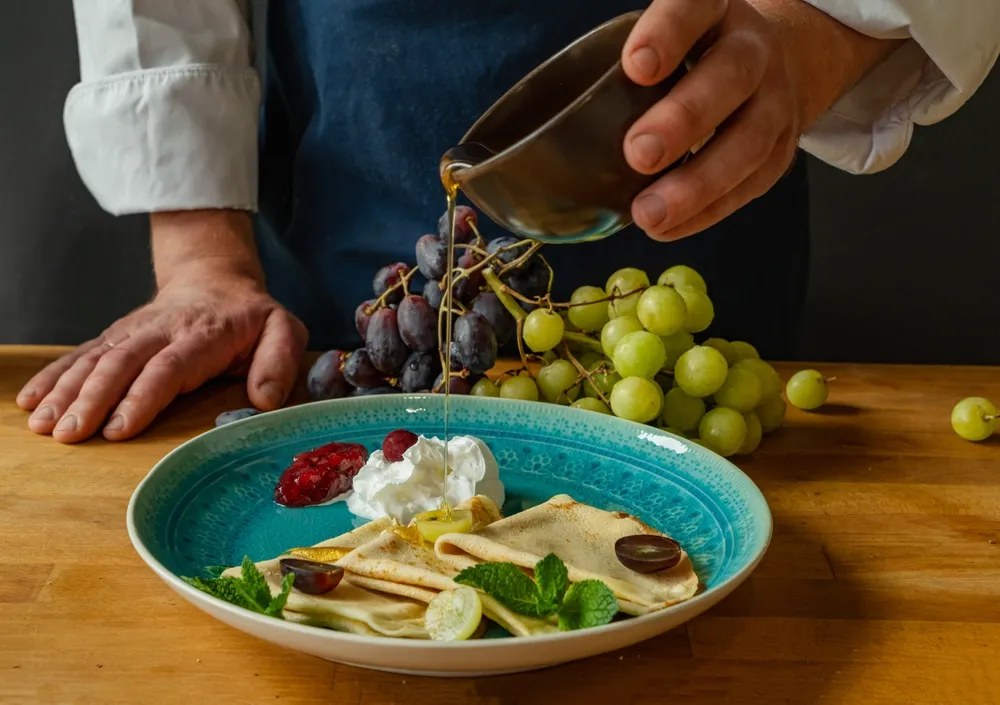
Grape syrup is commonly drizzled over bread, fresh cream, yogurt, or cheeses, creating a naturally sweet breakfast or snack rich in nutrients and flavor.
2. Baking and Confectionery
In baking, grape syrup serves as a natural sweetener and moisture enhancer. It can be used in cakes, cookies, pastries, and traditional sweets to impart a caramel-like sweetness with subtle grape undertones.
3. Savory Cooking
While primarily used in sweet applications, grape syrup can be incorporated into meat glazes and marinades, adding depth, color, and a mild fruity note to roasted dishes.
4. Beverages
Mixed with warm water or milk, grape syrup creates a nourishing traditional drink. It is also added to herbal teas or modern smoothies for natural sweetness and enhanced mineral content.
5. Healthy Snacks and Energy Foods
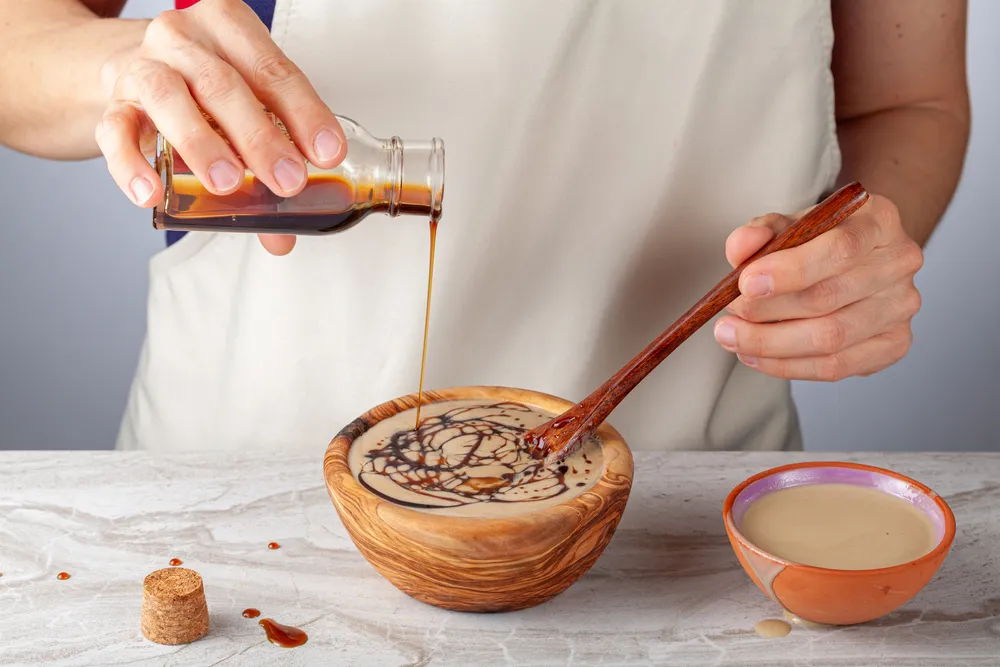
Combined with tahini, nuts, or sesame paste, grape syrup becomes a traditional energy-dense snack providing sustained vitality.
Nutritional Profile
Grape syrup is calorie-dense due to its natural sugar concentration but provides a healthier alternative to refined sweeteners, delivering additional minerals and antioxidants. It is free from additives, artificial coloring, or preservatives when produced authentically.
Buying and Storing Tips
• Choose grape syrup that is 100% natural with no added sugar for maximum health benefits.
• The syrup should have a thick consistency, rich brown to amber color, and a natural fruity-caramel aroma.
• Store in a cool, dry place, and refrigerate after opening to maintain freshness and prevent crystallization.